









Introduction: The True Cost of Unpaid Recruitment Fees
Did you know that 30% of recruitment agencies experience late or unpaid invoices annually? Unpaid recruitment fees can cripple cash flow, damage agency profitability, and disrupt business growth.
This guide provides a step-by-step for handling non-paying clients—covering proactive prevention, negotiation techniques, escalation strategies, and legal recourse.
Step 1: Prevention Strategies – Setting the Foundation for Payment
The best way to avoid non-payment issues is to prevent them before they happen. Here’s how:
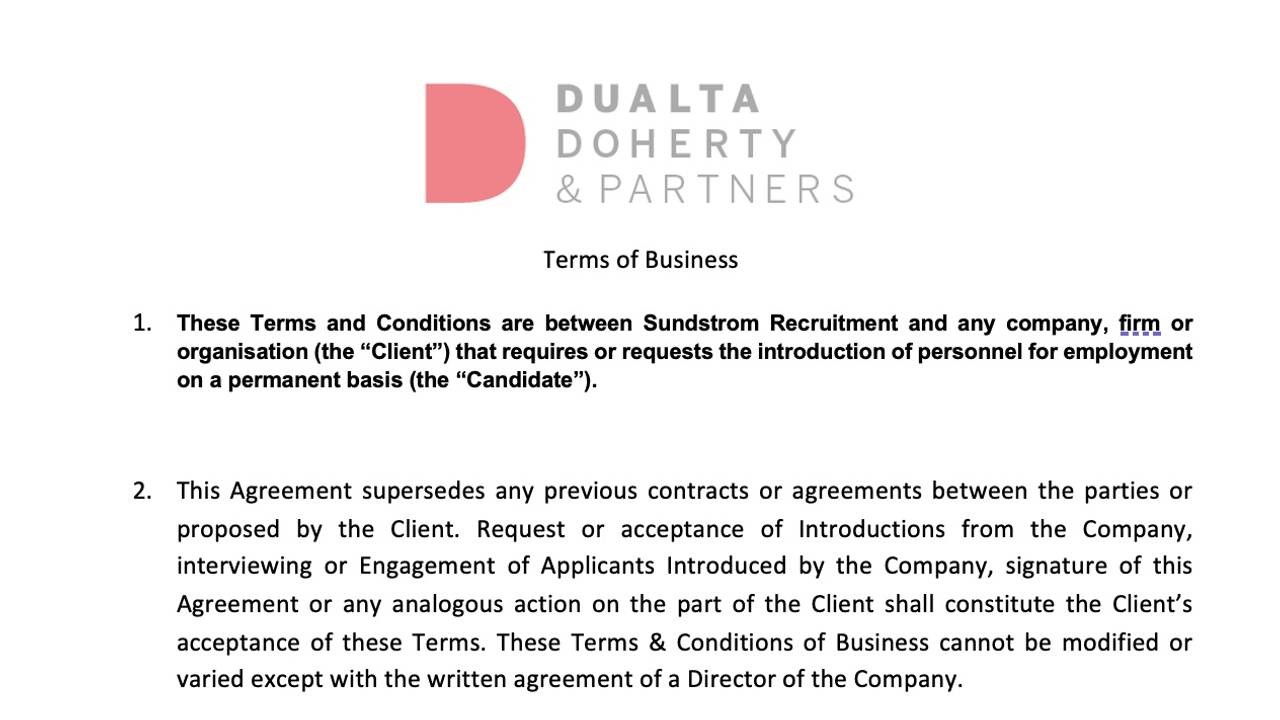
✔ Have a Clear Contract – Ensure your Terms of Business (TOB) include:
- Payment terms (e.g., Net 14, Net 30 deadlines)
- Late payment penalties (e.g., 5% fee after 14 days late)
- Legal recourse for unpaid fees
✔ Vet Your Clients Before Taking a Job
- Research their payment history and check for complaints.
- Avoid clients who refuse to sign contracts.
✔ Send Invoices Promptly & Automate Follow-Ups
- Use software like QuickBooks, Xero, or FreshBooks to automate invoices & reminders.
✔ Request Upfront or Partial Payment (especially for first-time clients).
- Example: Charge 30% upfront and the remaining after placement.
📌 Pro Tip: Agencies that require a deposit or retainer reduce non-payment risk by 50% (Bullhorn).
Step 2: Early-Stage Follow-Up – Handling the First Payment Delay
If payment is late, act quickly. A passive approach increases your risk of non-payment.
🔹 First Reminder Email (1-5 days late):
Subject: Friendly Reminder – Invoice #[Invoice Number]
"Hi [Client Name], I hope you're well! Just a quick reminder that invoice #[X] was due on [Due Date]. Please let us know when we can expect payment. Looking forward to your update!"
🔹 Second Reminder Email (5-10 days late):
"Hi [Client Name], Following up on our previous email regarding invoice #[X]. Can you confirm if payment has been processed or if there are any issues we can assist with? Please settle by [New Due Date] to avoid any late fees."
🔹 Phone Call Follow-Up (10-15 days late):
- Be direct but polite: "Hi [Client Name], I'm calling about invoice #[X], which is now overdue. Could you provide an update on the payment status?"
- Get a commitment: "Can we expect the payment by [New Deadline]?"
📌 Pro Tip: 70% of invoices are paid within 7 days after a direct phone follow-up.
Step 3: Late-Stage Escalation – Applying Pressure on Overdue Clients
If the client still hasn’t paid after multiple reminders, escalate accordingly.
🔹 Final Demand Email (15-30 days late):
"Dear [Client Name], This is our final notice regarding invoice #[X], which remains unpaid despite previous reminders. If payment is not received by [Final Date], we will proceed with legal action as outlined in our contract. Please arrange payment immediately to avoid further steps."
🔹 Late Payment Penalties:
- If your contract allows, add interest or late fees after 30 days.
- Example: "Per our agreement, a 5% late fee will apply after [Date]."
🔹 Withhold Future Services:
- "We must pause all recruitment activities for your company until the balance is settled."
📌 Pro Tip: Agencies that enforce late payment penalties experience a 60% higher success rate in recovering overdue fees.
Step 4: Legal & Collection Actions – What to Do When All Else Fails
If a client continues to ignore payment requests, escalate the matter legally.
🔹 Step 1: Send a Formal “Letter Before Action”
- A legally drafted letter warning of imminent legal action.
- 80% of clients pay within 7 days after receiving this.
🔹 Step 2: Engage a Debt Collection Agency
- Use agencies specializing in recruitment debt recovery.
- Best for invoices older than 60-90 days.
🔹 Step 3: File a Small Claims Court Case
- For debts under $10,000 (varies by country).
- Typically faster and less costly than high-court action.
🔹 Step 4: Hire a Lawyer & Pursue Legal Action
- If the amount owed is significant, pursue a formal lawsuit.
📌 Pro Tip: Agencies that send a formal “Letter Before Action” recover their fees in 80% of cases. (Vincere)
Step 5: Future-Proofing – Preventing Non-Payment from Happening Again
To avoid future unpaid invoices, implement these best practices:
✔ Require Retainers or Deposits for New Clients – Start with a 30-50% upfront payment.
✔ Work Exclusively with Contracted Clients – Avoid companies that refuse to sign agreements.
✔ Automate Invoice Tracking & Follow-Ups – Use Xero, QuickBooks, or FreshBooks.
✔ Blacklist Repeat Offenders – If a company has a history of non-payment, stop working with them.
📌 Pro Tip: Recruiters who charge upfront deposits reduce late payments by 50%.
Protect Your Fees, Protect Your Business
Every recruiter will face non-paying clients at some point. The key is to act early, escalate when necessary, and enforce strict payment policies.
✅ Step 1: Set clear contracts & vet clients before starting.
✅ Step 2: Follow up aggressively when payments are late.
✅ Step 3: Escalate with penalties & legal action if needed.
✅ Step 4: Implement preventative measures to protect your business.
Sources:
Bullhorn: bullhorn.com/recruitment-trends
Vincere: vincere.io/blog/a-step-by-step-guide-to-negotiating-recruitment-fees-with-clients
Related Content

This document delves into the crucial aspects of SLAs within the recruitment sector, providing you with the insights needed to establish clear, effective agreements with clients and candidates.
Downloadable
You Might Also Be Interested In